 Free |
 |
 |













Cider and Perry
|
|
Simple
Cider (to make 4.5l) by Peter Laycock.
 A
very easily made dry cider which is slightly acidic to the taste and can
easily be adapted/modified as required, I find adding the petals of an
aromatic, fully opened rose, picked on a good sunny day, can be added around
day 4, giving a little subtlety to the bouquet and flavour.
A
very easily made dry cider which is slightly acidic to the taste and can
easily be adapted/modified as required, I find adding the petals of an
aromatic, fully opened rose, picked on a good sunny day, can be added around
day 4, giving a little subtlety to the bouquet and flavour.
Ingredients:-
-
4 litres apple juice (Supermarket type with no added chemicals or sugars).
-
50g sugar (see Notes below).
-
5g (1tsp) Pectic enzyme.
-
5g (1tsp) Bentonite (not essential but will help the cider to clear).
-
2.5g (½ tsp) yeast nutrient.
-
Wine yeast (white
1) Add the
pectic enzyme to a sterilized demijohn; add the sugar after dissolving in
about 70ml of warmed water. Pour in all the apple juice (the enzyme is added
before the juice to help save it from oxidizing or going brown). Add the
Bentonite (if used), yeast & nutrient.
2) Fit an
airlock & keep the temperature about 17-21°C.
3) When the
bubbles in the airlock are more than 1 minute apart, the cider is deemed to
have “finished”. (You can add wine “finings” at this stage to help the cider
to clear.) Top the demijohn up to about 4.7 litres (this allows for
wastage). Keep the demijohn in a cool dark place for about a fortnight to
allow more sediment to settle out before bottling.
4) Bottle in
plastic "pop" (PET) bottles with ½ to 1 level tsp sugar per 500ml & keep
warm for a few days for the bottles to get "fat" or “un-squeezable” with the
pressure created by the secondary fermentation. For
safety reasons, glass bottles
5) Store
somewhere cool for at least a month before sampling.
Notes:-
This cider would typically have an O.G. of around 1038
and a F.G. of around 998, giving about 5.6%
For a less acidic cider the apple juice can be reduced
to 3 litres and the sugar increased to 150g for the same alcohol level.
Keeping the sugar level at 50g produces about 4.5%
Stronger versions can be produced by adding extra sugar
during stage 1, each extra 50g of sugar provides about 0.5% alcohol but do
not sacrifice quality for alcoholic strength!
Extracting the juice from apples for cider making
By far the easyest method for apple juiceis to buy tetra pak apple juice from the super market.
There are three key ways to make Cider from apples and they are:- pulp ferment slices, use a juicer, or pulp and press.
1) Slice and pulp ferment.
I use an apple corer that cores and evenly slices the apple. I discard the
core and put the slices directly into the fermenter. Once it is brewed for
about 48 hours I take the slices out and give them a bit of a bash and put
them back. I put them in a nylon sieve bag to allow the pulp to be removed
easily. (See recipy above and note use of pectic enzyme. This method can
make a gooey mess and needs pectic enzyme and good finning to end up with a
clear cider.
2) Juicer
Use a good whole fruit juicer. Make sure the whole fruit juicer gets rid of
the pulp as it goes. Apples give a juicer a fair workout and hence I suggest
a good juicer with a good motor 600-700watts should do it. To speed things
up you want a whole fruit juicer with a wide enough inlet to take your
apples without slicing them and then a good outlet that does not make you
stop frequently. Above I have put a link to the type of juicer I should have
bought. The one I have is not nearly as good but it does the job.
Key features are:- Motor size, In-let feeder size, Pulp catcher size, Easy
to empty pulp catcher.
3) Pulp and Press
The traditional method and probably best for larger quantities.
First you need to pulp up the apples. There are several methods for doing
this. From bashing them with a kitchen hammer to using a pulper.
Then the pulp is put in the press and the juice is squeezed out. The exact
method depends on quantity on apples.
The instructions below are the old style very strong country cider.
Country Cider by Mrs. Gennery-Taylor
"For the best cider, a mixture of different varieties of apples is best. Those usually chosen are non-keepers, small sour or windfall, with, if desired, a few crab-apples. An odd rotten apple in a large number is permissible, but otherwise they should be sound.
Before the Second World War, my historical searches tell me there were traveling cider presses in some districts, as many farms and cottages had a small orchard. This practice seems to have disappeared, though it may still exist in a few country areas.
To get your apples pressed ideally, a cider factory is the thing, if you can persuade them to do it. Alternatively, a cider factory might sell you newly pressed apple juice. For those who cannot find a cider factory, you can buy a fruit press from your local specialist shop.
The juice should be put into a wooden cask - a 30 gallon ex-brandy cask is ideal for first-class good keeping cider. Base your calculations on the fact that a ton of apples makes approximately 150 gallons of cider; therefore a cwt. makes approximately 7.5 gallons. Any good size wooden or plastic cask is suitable but the larger the better as fermentation goes on longer in a greater quantity of juice, thus producing a high alcohol content. The cask should stand in a cool place either on its side or end, wherever the bung hole is uppermost.
Never bung up the hole while fermentation is still going on; unless to bring the cask home, perhaps! After about forty eight hours the apple juice will start to ferment and white froth will bubble up through the bung hole. This will continue for about three weeks when fermentation has almost stopped, some juice should be siphoned out of the cask with a short length of sterile clear plastic pipe. The amount of juice removed should be sufficient to dissolve the required quantity of sugar.
Add 2 to 4 lb of sugar (depending on how sweet you want the cider) per gallon in the cask to the juice you have removed, and dissolved over heat. When quite dissolved, allow to cool, and then return to the cask. Owing to the addition of the sugar all the sweetened juice will not go back in at once. During fermentation, which will go on for about two weeks, the quantity of liquid in the cask reduces so that you can add the surplus gradually (as space permits). When fermentation has nearly finished, if all the 'juice and sugar mixture' is not in the cask, siphon out enough juice to allow this to go in. Bottle what you take out and use to keep the cask full while the cider is maturing -- as the quantity reduces during this process. Developing airspace in the cask will otherwise allow bacilli to breed and turn the cider acid.
When the juice has completely ceased to 'bubble up' bung the cask up tightly with either cork or wood, and leave for eight months.
Cider is usually made in October - November, and should be left as long as possible - up to two years before opening it, but at least until the cuckoo sings the following year. Then the cask may be tapped, or the cider bottled down with care.
Innocent to taste but powerful -- up to 15% alcohol can be achieved."
I have not changed any wording so as not to lose the spirit of her text. Clearly there are parts that need updating as we are likely to use food grade plastic not "alas" wooden casks".
The yeast is naturally on the apples. This is the traditional method one could take some risk out by adding a prepared yeast culture (champagne yeast).
There is an interesting point and that is it does best in large quantities. This is also true of regular wine production. I'm not likely to pop down to the super market for a ton of mixed apples but maybe a group of us home brewers could club together to reproduce this vintage cider.
Perry (pear cider)
Dry perry (pears) / cider (apples)
firm but juicy pears
So, your apple/pear tree is overflowing and there is
only so much you can eat. Well you can always brew them!
Ingredients
sour apples (cider) or firm but juicy pears (perry)
1) Choose your fruit make sure you avoid bad ones
2) Leave them in a warmish place for several weeks until they are just beginning
to soften.
3) Chop and smash the fruit into a pulp
4) Strain through muslin, pressing very hard so that all juices are extracted. A
fruit press is best for this but that an expense we'll try to avoid.
5) Keep this juice in the pan in a warm place.
6) Allow to bubble.
7) When bubbles rise to the surface of the liquid and the sediment drops to the
bottom, put into a cask.
(Please note this recipe is country style
where the natural yeast on the fruit is relied upon to ferment the extracted
juice. This can be risky as who knows what yeast there is on your apples. Some
less country minded folk wash there apples very well and add brewers yeast to
the extracted juice to ensure that all is well)
8) Once bubbles stop and the brew is in the cask cover tightly.
9) Leave for 6-7 months
10 Strain and bottle.
Apple picker from Nether Wallop Trading
 I
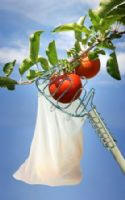
went out apple picking armed with my new apple picker. Tried it out on a
nice mix of cooking apples and eating apples. The picker does not come with
a pole but fortunately most poles seem to fit. I used a wooden pole from my
beach wind breaker. Tied a few poles together for the high up apples. Did it
work? Was it of benefit? Yes and Yes. To pick the high up apples you need a
picker like this and you want the picker to have a catcher or the apples
will bruise. Last year I used a step ladder and nearly got a free ride to
A&E. I found the picker great for eating apples but it was a lot harder on
the cooking apples. Cooking apples seem to hang on to the tree and cluster
in tight bunches. Oh yes make sure the picker is firmly attached I nearly
got the picker end stuck up in the tree. Once it is on firmly and you have
the right technique then its easy. I managed to pick apples more than 20
foot up. The picker is made from galvanized steel and has a cotton bag large
enough to hold about a kilo of fruit. I have not tried it on pears or plums
yet but I and sure it will do well on these.
I
went out apple picking armed with my new apple picker. Tried it out on a
nice mix of cooking apples and eating apples. The picker does not come with
a pole but fortunately most poles seem to fit. I used a wooden pole from my
beach wind breaker. Tied a few poles together for the high up apples. Did it
work? Was it of benefit? Yes and Yes. To pick the high up apples you need a
picker like this and you want the picker to have a catcher or the apples
will bruise. Last year I used a step ladder and nearly got a free ride to
A&E. I found the picker great for eating apples but it was a lot harder on
the cooking apples. Cooking apples seem to hang on to the tree and cluster
in tight bunches. Oh yes make sure the picker is firmly attached I nearly
got the picker end stuck up in the tree. Once it is on firmly and you have
the right technique then its easy. I managed to pick apples more than 20
foot up. The picker is made from galvanized steel and has a cotton bag large
enough to hold about a kilo of fruit. I have not tried it on pears or plums
yet but I and sure it will do well on these.
Hard Cider
Hard cider is not a term we use much here in the UK. In some parts of the US they refer to non-alcoholic apple juice as cider. To distinguish between non-alcoholic apple juice and alcoholic apple juice they called the one with alcohol "hard cider". Then just to confuse things even more you can distil fermented cider of around 7% alcohol to be a 40% version. Much harder and I think it’s still called hard cider. Drinks such as apple jack are more popular in the USA. I have not seen this on sale in the UK but know it’s got a strong following elsewhere. This type of drink is sometimes made by back woodsmen with a home made pot still.
So to recap my understanding of what I think the Americans and the Canadians call different apple drinks.
|
Alcohol percent |
US / Canada term |
UK term |
|
0 |
Cider |
Apple Juice |
|
5-7% |
Hard Cider |
Cider or old the world term Cyder |
|
10-14% |
Apple Wine |
Apple Wine |
|
40% |
Hard Cider |
Apple Brandy |
WARNING: Distilling is a skill of its
own and if not done correctly is very dangerous. The alcohol fumes can blow up
home made stills, and the end result if not done by an expert can be very toxic
resulting in death or blindness.
If you know what you are doing and if it is legal and safe then please don't let
me put you off.
FREE home brewing magazines
CONTACT: Email: Do drop us a line.

 All text on this site is purely the various contributing author's personal views and
should not be taken as fact.
All text on this site is purely the various contributing author's personal views and
should not be taken as fact.